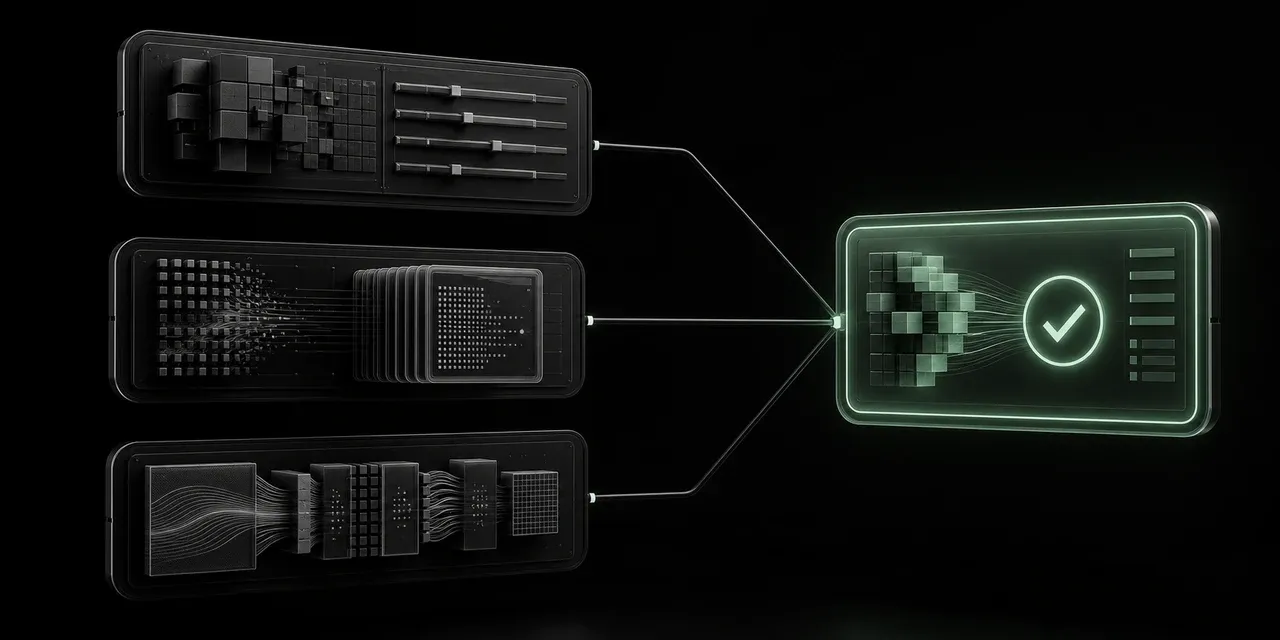
For most AI products, prompt engineering handles roughly 90% of what you actually need, RAG becomes the right call when your model has to reason over knowledge it was never trained on, and fine-tuning earns its cost only when you need consistent tone, format, or behavior at scale. That’s the short version of the fine-tuning vs RAG vs prompt engineering decision. The longer version, with real cost and timeline for each, is what separates teams that ship in weeks from teams that burn a quarter on the wrong architecture.
Here’s the counterintuitive part: the most expensive option is almost never the one to reach for first. Yet fine-tuning is where many teams start, because retraining the model feels like the serious, grown-up path.
If you’re a founder or CTO staring at an architecture decision before a single line of production code exists, you already sense this is expensive to get wrong. This guide gives you the decision framework a senior AI engineer actually uses, the honest cost and timeline of each option, and a way to layer all three so you ship the smallest thing that works. No LLM 101, and no pitch for a vector database you may not need.
Key Takeaways
- Start with prompt engineering. It solves most use cases in days, costs only engineering time, and needs no training data or infrastructure.
- Add RAG when your product must answer from current, proprietary, or high-volume knowledge the base model doesn’t contain. Budget 2 to 6 weeks for a solid pipeline.
- Fine-tune last, and only for consistent tone, format, or narrow behavior at scale. It’s the costliest option and the one teams reach for too early.
- In production these aren’t mutually exclusive. Durable AI products layer a strong prompt over RAG and reserve fine-tuning for the few behaviors prompting can’t pin down.
Picture a seed-stage founder, call her Maya, building a customer-support assistant. Her first instinct was to fine-tune a model on two years of support tickets. Three months and a five-figure labeling bill later, the assistant still gave outdated answers, because the help docs changed weekly and the fine-tuned model had baked in last quarter’s reality. The fix wasn’t a better fine-tune. It was an afternoon of prompt work plus a retrieval layer that read the live docs. Maya had spent a quarter solving the wrong problem.
The AI Architecture Decision Most Teams Get Backwards
These are your three core LLM customization options, and they sit on a ladder of cost and complexity, not a menu of equals. Prompt engineering is the bottom rung: cheap, fast, reversible. RAG is the middle: more moving parts and real infrastructure, but no model training. Fine-tuning is the top: the most expensive to build, the slowest to iterate, and the hardest to undo.
The mistake is climbing to the top rung first. Teams assume that customizing the model weights is the serious path and that prompting is a toy. In production the opposite is usually true, and it’s the first principle of a sane AI engineering approach: start at the bottom and climb only when a specific, named limitation forces you up. Every rung you skip past without cause adds cost, time, and maintenance you’ll carry for the life of the product.
So the real question isn’t fine-tuning vs RAG vs prompt engineering as a one-time pick. It’s this: what’s the cheapest layer that solves my actual problem, and what evidence would tell me I’ve outgrown it?
Prompt Engineering: The Default That Solves Most Cases
Prompt engineering means shaping the model’s behavior through instructions, examples, and context you pass in at request time, without changing the model itself. It’s the first thing to try for one reason: it’s the only option with near-zero setup cost and instant iteration.
When prompt engineering is the right call
Reach for prompting first when the knowledge your feature needs already lives in the model or fits in the context window. Classification, summarization, extraction, rewriting, drafting, routing, and most agent tool-calling are prompt problems. If a senior engineer can get the model to the right answer by rewriting the instructions and adding a few examples, you’re done. Ship it.
Real cost and timeline
- Build time: hours to two weeks, depending on how much evaluation you build around it.
- Upfront cost: senior engineering time only. No training runs, no data pipeline, no extra infrastructure.
- Ongoing cost: per-token inference to the model provider. Longer prompts cost more per call, which matters at scale.
- Iteration speed: immediate. Change a line, rerun your evals, see the result.
The trap is stopping too soon on quality. Good prompt engineering isn’t one clever instruction; it’s structured prompting, few-shot examples, and a real evaluation set so you know a change helped instead of guessing. Skip that discipline and you’ll wrongly conclude prompting doesn’t work, then jump to something far more expensive.
Plenty of the AI features teams bring us never needed anything past this layer; they needed it done properly. If you’re weighing whether prompt engineering can carry your feature, it’s worth a short conversation before committing budget to anything heavier. See how we approach custom software development for AI products.
RAG: When Your Model Needs Knowledge It Doesn’t Have
Retrieval-augmented generation (RAG) connects the model to an external knowledge source at query time. Instead of hoping the answer is baked into the weights, you retrieve the relevant documents, pass them into the prompt, and let the model reason over current, specific information. This settles the rag vs fine tuning question for most knowledge problems: when the issue is what the model knows, RAG usually beats fine-tuning.
When RAG is the right call
Choose RAG when your product must answer from information the base model never saw, or that changes too often to bake in: internal documentation, a live product catalog, legal or medical corpora, customer records, anything proprietary or frequently updated. It’s also the right layer when context volume matters, when the relevant knowledge is far too large to stuff into a single prompt. RAG retrieves only the slices that matter for each query.
Real cost and timeline
- Build time: roughly 2 to 6 weeks for a production-grade pipeline, including chunking, embeddings, a vector store, retrieval logic, and evaluation.
- Upfront cost: meaningfully higher than prompting. You’re building and testing a retrieval system, not just writing instructions.
- Ongoing cost: vector database hosting, embedding generation, and larger prompts at inference, since retrieved context adds tokens.
- Iteration speed: fast on content, since updating the documents updates the answers, but slower on retrieval quality, which takes real engineering to tune.
The hard part of RAG isn’t wiring up a vector database. It’s retrieval quality: chunking documents sensibly, ranking results so the model sees the right passage, and handling the cases where nothing relevant is found. Done well, RAG kills hallucination on your own data. Done carelessly, it retrieves the wrong paragraph and the model confidently builds on it. Because a retrieval pipeline is mostly data and API plumbing, the people you want are senior Python engineers who’ve built these systems before, not a research lab.
Consider a B2B analytics startup whose docs assistant kept inventing API endpoints that didn’t exist. The team assumed the model was too weak and priced out a fine-tune. The actual issue: the assistant had no access to their current API reference. A retrieval layer over the live docs cut fabricated answers to near zero in under three weeks, at a fraction of the fine-tuning quote. The model was never the problem. Its lack of grounding was.
Fine-Tuning: When Tone and Behavior Matter at Scale
Fine-tuning adjusts the model’s actual weights by training it further on a curated dataset of examples. It changes how the model behaves by default, not just what you tell it in one prompt. Knowing when to fine tune an LLM is mostly about knowing when the other two layers genuinely can’t get you there.
When fine-tuning is the right call
Fine-tune when you need consistent tone, format, or narrow behavior that prompting can’t reliably enforce, and you need it across a high volume of calls. Good fits: enforcing a very specific output structure every time, matching a distinctive brand voice at scale, teaching a specialized classification the model keeps getting wrong, or compressing a long, expensive prompt into a smaller, cheaper model trained to behave. Note what isn’t on that list: giving the model new facts. Fine-tuning teaches behavior, not current knowledge. For knowledge, you want RAG.
Real cost and timeline
- Build time: several weeks to a few months, dominated by data preparation, not training.
- Upfront cost: the highest of the three. Curating and labeling a quality dataset is the real expense; the training run is often the cheap part.
- Ongoing cost: hosting or serving the fine-tuned model, plus re-training whenever the behavior needs to change.
- Iteration speed: slowest. Every meaningful change means new data and another training cycle.
Fine-tuning’s hidden cost is maintenance. A fine-tuned model is a frozen snapshot of behavior. When your product shifts, or the provider ships a better base model, you re-train to keep up. That’s an ongoing commitment, not a one-off. It’s worth it when the behavior gain is real and durable, and expensive theater when prompting would have done the job.
Fine-tuning does earn its keep in the right spot. A team processing millions of insurance claims needed every extraction returned in one identical, rigid schema, and prompt tweaks kept drifting on edge cases at that volume. A fine-tune on a few thousand carefully labeled examples locked the format down and cut per-call cost by moving to a smaller model. The difference from Maya’s story: they’d already exhausted prompting, the behavior was stable, and the scale justified the investment.
The Decision Matrix: Fine-Tuning vs RAG vs Prompt Engineering
Here’s the framework a senior engineer applies when choosing between fine-tuning vs RAG vs prompt engineering. Read it top to bottom and stop at the first layer that solves your problem.
Choose prompt engineering when:
- The knowledge you need is already in the model or fits in the context window.
- You’re doing classification, summarization, extraction, drafting, or agent tool-calling.
- You want to ship this week and iterate in minutes.
- You haven’t yet built a real evaluation set. Do this before concluding prompting failed.
Add RAG when:
- Your product must answer from proprietary, current, or frequently changing information.
- The relevant knowledge is too large to fit in a single prompt.
- You see hallucinations on your own data that better instructions can’t fix.
- Accuracy on specific facts matters more than a specific style.
Reach for fine-tuning when:
- You need consistent tone, format, or behavior that prompting can’t reliably enforce.
- You operate at a volume where a smaller trained model saves real money.
- The behavior is stable enough to justify re-training when it changes.
- You’ve already proven prompting and RAG can’t close the gap.
On the recurring rag vs fine tuning debate, the tie-breaker is simple: if the problem is what the model knows, use RAG; if the problem is how the model behaves, consider fine-tuning. Most teams discover their problem was knowledge all along.
Ready to pressure-test your own decision? Bring your use case to a strategy call and a senior AI engineer will map it to the right layer, with a real cost and timeline, before you commit to a build.
How to Layer All Three in a Real AI Product Architecture
The vs framing is useful for deciding where to start, but mature AI product architecture rarely uses just one technique. The strongest production systems layer them.
A durable stack usually looks like this: a carefully engineered prompt sets the model’s role and rules, RAG grounds it in your live proprietary knowledge, and, only where a specific behavior still won’t hold, a targeted fine-tune enforces it. Each layer does the job it’s best at. Prompting steers, retrieval grounds, fine-tuning standardizes.
This is why order matters. Build the prompt and evaluation harness first, because you need it to measure whether RAG or a fine-tune actually helped. Add retrieval next if knowledge is the gap. Fine-tune last, once you have the data and the evidence to justify it. Teams that invert this order pay in wasted cycles and a system nobody fully understands. If you’re building a SaaS product with AI features, this layered approach keeps you shipping while competitors are still labeling training data.
How Devlyn Ships AI Features Safely in Production
Teams get this decision wrong not for lack of tutorials, but because choosing well requires someone who has shipped all three in production and knows the failure modes before hitting them. That judgment is what a senior AI engineer brings to the table.
Devlyn’s engineers carry 5 to 10+ years of experience and work in an AI-driven development workflow: AI accelerates the mechanical work, and a senior engineer reviews every output before it touches production. For AI features, that means we start with the cheapest layer that works, build the evaluation harness that proves it’s working, and escalate to RAG or fine-tuning only when the evidence demands it. You see working software every Friday through weekly demos, so you know by week one whether the approach is tracking, not month three.
That review-first discipline is the core of our AI-driven engineering culture. The result: you ship the right architecture in weeks, not a quarter, and you don’t inherit an over-engineered system you can’t maintain.
Frequently Asked Questions
Is RAG or fine-tuning better for a chatbot answering from proprietary data?
RAG. It grounds answers in your live proprietary data, while fine-tuning teaches behavior, not current knowledge, and quickly goes stale.
How much does it cost to fine-tune an LLM?
Costs vary widely, but data preparation dominates the budget, often far exceeding the training run itself and any prompting alternative.
Can prompt engineering replace fine-tuning?
Often yes. For most tasks, structured prompts with strong examples match fine-tuning quality at a fraction of the cost.
When should a startup choose RAG over fine-tuning?
Choose RAG when the problem is missing knowledge. Choose fine-tuning only when the problem is consistent behavior at scale.
Choosing the Right Layer for Your AI Product
The fine-tuning vs RAG vs prompt engineering decision comes down to one habit: start with the cheapest layer that could work, and climb only when real evidence forces you. Prompt engineering for most cases. RAG when knowledge is the gap. Fine-tuning for tone and behavior at scale, once you’ve proven the others can’t get there. Get the order right and you ship a lean AI product in weeks. Get it backwards and you’ll spend a quarter maintaining complexity you never needed.
If you’re at the architecture-decision stage and want a senior read before you build, that’s exactly the conversation we’re built for. Book a Strategy Call at devlyn.ai/contact. No pitch deck, no pressure, just an honest map from your use case to the right AI architecture, with a real cost and timeline.